

Quick Key Takeaways
- Master settings before gameplay. Small sensitivity and HUD adjustments can improve accuracy more than changing weapons.
- Survival wins matches. Smart positioning and map awareness matter more than chasing every fight.
- Use game mechanics to your advantage. Movement, utility items, and sound cues often decide close battles.
- Consistency beats luck. Practicing a few advanced habits every match produces steady improvement.
Introduction
Many new Free Fire players focus on collecting better weapons or landing more eliminations, but experienced players know that success depends on much more than aim. Small gameplay habits, hidden mechanics, and overlooked settings often separate beginners from players who consistently reach the final zone.
If you’ve been wondering why opponents seem faster, hit harder, or always know where you are, chances are they’re taking advantage of techniques that the game never clearly explains. Learning these hidden strategies can improve your survival rate, increase your win percentage, and help you climb ranked matches more efficiently.
This guide shares practical Free Fire hidden tips most beginners don’t know, including movement techniques, combat habits, settings optimization, and tactical decisions that provide a noticeable advantage without requiring expensive in-game items.
What Are Free Fire Hidden Tips
Free Fire hidden tips are lesser-known gameplay techniques, settings, and strategic habits that help players survive longer, aim more accurately, rotate safely, and win more fights. These include optimizing sensitivity settings, customizing the HUD, using sound cues, managing movement effectively, understanding weapon strengths, and making smarter positioning decisions rather than relying solely on fast reflexes.
Unlike basic tutorials, these tips focus on mechanics and decision-making that experienced players naturally develop over time.
Why Most Beginners Miss These Tricks
Most new players spend their first matches learning weapon locations and controls. While those fundamentals are necessary, they often overlook deeper mechanics such as:
- Advanced movement during gunfights
- Audio-based enemy detection
- Efficient inventory management
- Safe rotation between zones
- Smart use of cover
- Character ability combinations
- Crosshair placement before encountering enemies
- Landing strategies that balance loot quality with survival
These small adjustments may seem insignificant individually, but together they can have a substantial impact on match performance over time.
Who Will Benefit Most From This Guide?
This guide is designed for players who:
- Recently started playing Free Fire
- Want to improve their ranked performance
- Lose close-range fights frequently
- Struggle to survive until the final circles
- Want practical strategies instead of relying on premium items or luck
Whether you play solo, duo, or squad mode, the techniques covered in this guide can help you build stronger game awareness and make better in-match decisions.
Core Detailed Guide: 21 Hidden Free Fire Tips That Can Improve Your Gameplay
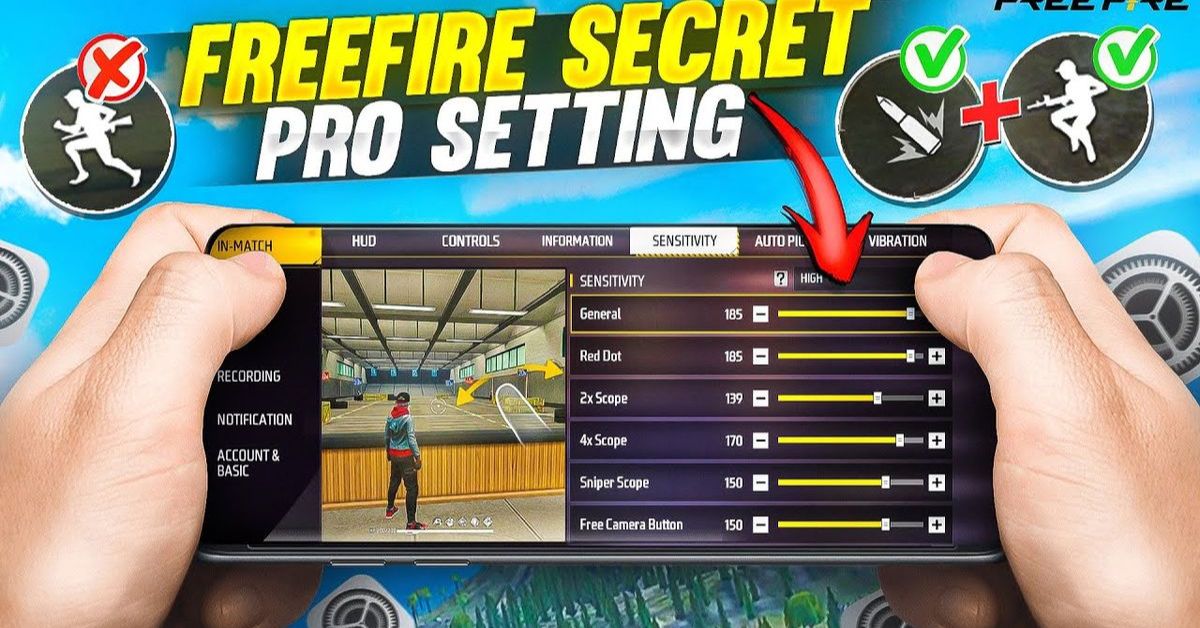
1. Adjust Sensitivity Before You Change Weapons
- Direct answer: Your sensitivity settings affect accuracy more than switching to a different gun.
The default sensitivity isn’t ideal for every device. Spend time in the training ground and fine-tune settings until your aim feels natural. High sensitivity can help with quick flicks, while lower settings often improve long-range control.
| Setting | Recommended Starting Range |
|---|---|
| General | High |
| Red Dot | Medium-High |
| 2x Scope | Medium |
| 4x Scope | Medium-Low |
| Sniper Scope | Low |
| Free Look | High |
Tip: Small adjustments (5–10 points at a time) are easier to adapt to than major changes.
2. Customize Your HUD Layout
Many beginners use the default button layout, which can slow down reactions.
Move fire, crouch, jump, and medkit buttons where your thumbs naturally reach them. A customized HUD reduces unnecessary movement and helps you react faster during close-range fights.
3.Land Smart—Not Just at Hot Drops
Popular locations offer great loot but attract many players.
Instead of landing in the busiest area every match:
- Choose nearby buildings.
- Collect essential gear first.
- Enter fights only after you’re equipped.
This increases your chances of surviving the early game.
4. Listen More Than You Shoot
Sound is one of the strongest sources of information in Free Fire.
Footsteps, reload sounds, gunfire, vehicles, and doors can reveal enemy locations before they’re visible.
Good audio awareness helps you:
- Prepare for incoming enemies.
- Avoid unnecessary fights.
- Plan ambushes.
- Rotate more safely.
Playing with quality headphones can make these cues easier to distinguis
5. Keep Your Crosshair at Chest or Head Level
Many beginners point their crosshair toward the ground while moving.
Instead:
- Keep it aligned with where an enemy is likely to appear.
- This reduces the distance your aim must travel before firing.
- Faster target acquisition often leads to winning close encounters.
6. Use Cover Constantly
Standing in the open is one of the quickest ways to get eliminated.
Move between:
- Rocks
- Trees
- Buildings
- Walls
- Vehicles
- Gloo Walls
Think of every fight as moving from cover to cover, not from open space to open space
7. Learn When NOT to Fight
Every gunfight carries risk.
Ask yourself:
- Is the enemy already fighting someone else?
- Am I outside the safe zone?
- Do I have enough healing items?
- Is my position stronger?
Skipping one unnecessary fight can help you reach the final zone with better equipment.
8. Master Gloo Wall Placement
Experienced players don’t use Gloo Walls only after taking damage.
They also use them to:
- Block sniper sightlines.
- Revive teammates safely.
- Heal without exposure.
- Push aggressive opponents.
- Create temporary cover in open fields.
Good placement is often more valuable than quick placement.
9. Reload at Safe Moments
Running into battle with half a magazine is a common beginner mistake.
Develop the habit of reloading:
- After every engagement.
- While rotating.
- Behind cover.
- Before entering buildings.
Never reload while exposed unless absolutely necessary.
10. Carry Balanced Healing Items
A common mistake is filling the backpack with ammunition.
Instead, maintain a balanced inventory:
- Medkits
- Inhalers or energy items
- Gloo Walls
- Grenades
- Sufficient ammunition for your primary weapons
Efficient inventory management leaves room for valuable late-game loot.
11. Rotate Before the Safe Zone Closes
Waiting until the last second forces you into predictable paths.
Early rotations help you:
- Avoid crowded routes.
- Secure stronger positions.
- Reduce pressure from enemies following the zone.
12. Practice Movement During Gunfights
Standing still makes you an easy target.
Practice combining:
- Strafing
- Jumping
- Crouching
- Quick direction changes
Avoid predictable patterns that experienced players can track.
13. Don’t Ignore Utility Items
Grenades and other utility items can:
- Flush enemies from cover.
- Force movement.
- Finish knocked opponents.
- Create opportunities without direct exposure.
Many beginners underuse these tools.
14. Know Your Weapon’s Strength
Not every weapon is designed for every situation.
| Weapon Type | Best Use |
|---|---|
| Assault Rifle | Balanced combat |
| SMG | Close-range fights |
| Shotgun | Point-blank engagements |
| Sniper Rifle | Long-range elimination |
| Marksman Rifle | Medium to long range |
| LMG | Sustained fire |
Using weapons within their intended range significantly improves effectiveness.
15. Don’t Stay in One Spot After Shooting
Gunfire reveals your location.
After firing:
- Change angles.
- Reposition.
- Use nearby cover.
- Avoid peeking from the exact same location repeatedly.
This makes you harder to predict.
16. Watch the Kill Feed
The kill feed provides valuable information.
You can learn:
- Which weapons opponents are using.
- Whether nearby fights have ended.
- When strong players have been eliminated.
- If a third-party opportunity exists.
17. Play the Edge of the Safe Zone Wisely
The center isn’t always the safest place.
Sometimes staying near the edge:
- Reduces the number of directions enemies can attack from.
- Makes rotations more predictable.
- Helps you avoid being surrounded.
Adapt your position based on terrain and remaining players.
18. Learn From Every Elimination
Instead of immediately starting another match, ask:
- Where was the enemy positioned?
- Did I expose myself unnecessarily?
- Was my aim or decision-making the issue?
- Could I have rotated earlier?
Reviewing mistakes is one of the fastest ways to improve.
19. Practice in Training Mode Regularly
Even 10–15 minutes of practice before ranked matches can improve:
- Aim consistency
- Recoil control
- Weapon familiarity
- Flick shots
- Movement timing
Short, focused sessions are often more effective than long, unfocused play.
20. Communicate in Squad Matches
Strong teamwork wins more games than individual skill.
Useful callouts include:
- Enemy direction
- Number of opponents
- Healing status
- Loot availability
- Rotation plans
Clear communication prevents confusion during fights.
21. Prioritize Positioning Over Eliminations
Many beginners chase every visible opponent.
Experienced players focus on:
- High ground
- Strong cover
- Safe rotations
- Zone control
- Information gathering
Winning the match is more valuable than having the highest elimination count.
Benefits of Applying These Hidden Tips
| Benefit | Impact on Gameplay |
|---|---|
| Better positioning | Higher survival rate |
| Improved settings | More accurate shooting |
| Smarter rotations | Fewer unnecessary fights |
| Efficient inventory | Better late-game readiness |
| Stronger movement | Harder to eliminate |
| Better decision-making | More consistent ranked progress |
Best Use Cases
These strategies are especially effective for:
- New Free Fire players learning core mechanics.
- Returning players adapting to current gameplay.
- Ranked mode players seeking consistent improvement.
- Solo players who rely on positioning and awareness.
- Duo and squad players looking to improve teamwork and survival.
Potential Drawbacks and Considerations
While these tips can improve performance, keep a few things in mind:
- Changing sensitivity too frequently can make aiming inconsistent.
- Advanced movement techniques require practice before they feel natural.
- Aggressive strategies don’t suit every match—adapt to the safe zone, terrain, and available equipment.
- Updates to Free Fire may occasionally adjust weapons, abilities, or game mechanics, so revisit your strategies after major patches.
Core Detailed Guide: 21 Hidden Free Fire Tips That Can Improve Your Gameplay
1. Adjust Sensitivity Before You Change Weapons
Direct answer: Your sensitivity settings affect accuracy more than switching to a different gun.
The default sensitivity isn’t ideal for every device. Spend time in the training ground and fine-tune settings until your aim feels natural. High sensitivity can help with quick flicks, while lower settings often improve long-range control.
| Setting | Recommended Starting Range |
|---|---|
| General | High |
| Red Dot | Medium-High |
| 2x Scope | Medium |
| 4x Scope | Medium-Low |
| Sniper Scope | Low |
| Free Look | High |
Tip: Small adjustments (5–10 points at a time) are easier to adapt to than major changes.
2. Customize Your HUD Layout
Many beginners use the default button layout, which can slow down reactions.
Move fire, crouch, jump, and medkit buttons where your thumbs naturally reach them. A customized HUD reduces unnecessary movement and helps you react faster during close-range fights.
3. Land Smart—Not Just at Hot Drops
Popular locations offer great loot but attract many players.
Instead of landing in the busiest area every match:
- Choose nearby buildings.
- Collect essential gear first.
- Enter fights only after you’re equipped.
This increases your chances of surviving the early game.
4. Listen More Than You Shoot
Sound is one of the strongest sources of information in Free Fire.
Footsteps, reload sounds, gunfire, vehicles, and doors can reveal enemy locations before they’re visible.
Good audio awareness helps you:
- Prepare for incoming enemies.
- Avoid unnecessary fights.
- Plan ambushes.
- Rotate more safely.
Playing with quality headphones can make these cues easier to distinguish.
5. Keep Your Crosshair at Chest or Head Level
Many beginners point their crosshair toward the ground while moving.
Instead:
- Keep it aligned with where an enemy is likely to appear.
- This reduces the distance your aim must travel before firing.
- Faster target acquisition often leads to winning close encounters.
6. Use Cover Constantly
Standing in the open is one of the quickest ways to get eliminated.
Move between:
- Rocks
- Trees
- Buildings
- Walls
- Vehicles
- Gloo Walls
Think of every fight as moving from cover to cover, not from open space to open space.
7. Learn When NOT to Fight
Every gunfight carries risk.
Ask yourself:
- Is the enemy already fighting someone else?
- Am I outside the safe zone?
- Do I have enough healing items?
- Is my position stronger?
Skipping one unnecessary fight can help you reach the final zone with better equipment.
8. Master Gloo Wall Placement
Experienced players don’t use Gloo Walls only after taking damage.
They also use them to:
- Block sniper sightlines.
- Revive teammates safely.
- Heal without exposure.
- Push aggressive opponents.
- Create temporary cover in open fields.
Good placement is often more valuable than quick placement.
9. Reload at Safe Moments
Running into battle with half a magazine is a common beginner mistake.
Develop the habit of reloading:
- After every engagement.
- While rotating.
- Behind cover.
- Before entering buildings.
Never reload while exposed unless absolutely necessary.
10. Carry Balanced Healing Items
A common mistake is filling the backpack with ammunition.
Instead, maintain a balanced inventory:
- Medkits
- Inhalers or energy items
- Gloo Walls
- Grenades
- Sufficient ammunition for your primary weapons
Efficient inventory management leaves room for valuable late-game loot.
11. Rotate Before the Safe Zone Closes
Waiting until the last second forces you into predictable paths.
Early rotations help you:
- Avoid crowded routes.
- Secure stronger positions.
- Reduce pressure from enemies following the zone.
12. Practice Movement During Gunfights
Standing still makes you an easy target.
Practice combining:
- Strafing
- Jumping
- Crouching
- Quick direction changes
Avoid predictable patterns that experienced players can track.
13. Don’t Ignore Utility Items
Grenades and other utility items can:
- Flush enemies from cover.
- Force movement.
- Finish knocked opponents.
- Create opportunities without direct exposure.
Many beginners underuse these tools.
14. Know Your Weapon’s Strength
Not every weapon is designed for every situation.
| Weapon Type | Best Use |
|---|---|
| Assault Rifle | Balanced combat |
| SMG | Close-range fights |
| Shotgun | Point-blank engagements |
| Sniper Rifle | Long-range elimination |
| Marksman Rifle | Medium to long range |
| LMG | Sustained fire |
Using weapons within their intended range significantly improves effectiveness.
15. Don’t Stay in One Spot After Shooting
Gunfire reveals your location.
After firing:
- Change angles.
- Reposition.
- Use nearby cover.
- Avoid peeking from the exact same location repeatedly.
This makes you harder to predict.
16. Watch the Kill Feed
The kill feed provides valuable information.
You can learn:
- Which weapons opponents are using.
- Whether nearby fights have ended.
- When strong players have been eliminated.
- If a third-party opportunity exists.
17. Play the Edge of the Safe Zone Wisely
The center isn’t always the safest place.
Sometimes staying near the edge:
- Reduces the number of directions enemies can attack from.
- Makes rotations more predictable.
- Helps you avoid being surrounded.
Adapt your position based on terrain and remaining players.
18. Learn From Every Elimination
Instead of immediately starting another match, ask:
- Where was the enemy positioned?
- Did I expose myself unnecessarily?
- Was my aim or decision-making the issue?
- Could I have rotated earlier?
Reviewing mistakes is one of the fastest ways to improve.
19. Practice in Training Mode Regularly
Even 10–15 minutes of practice before ranked matches can improve:
- Aim consistency
- Recoil control
- Weapon familiarity
- Flick shots
- Movement timing
Short, focused sessions are often more effective than long, unfocused play.
20. Communicate in Squad Matches
Strong teamwork wins more games than individual skill.
Useful callouts include:
- Enemy direction
- Number of opponents
- Healing status
- Loot availability
- Rotation plans
Clear communication prevents confusion during fights.
21. Prioritize Positioning Over Eliminations
Many beginners chase every visible opponent.
Experienced players focus on:
- High ground
- Strong cover
- Safe rotations
- Zone control
- Information gathering
Winning the match is more valuable than having the highest elimination count
Benefits of Applying These Hidden Tips
| Benefit | Impact on Gameplay |
|---|---|
| Better positioning | Higher survival rate |
| Improved settings | More accurate shooting |
| Smarter rotations | Fewer unnecessary fights |
| Efficient inventory | Better late-game readiness |
| Stronger movement | Harder to eliminate |
| Better decision-making | More consistent ranked progress |
Best Use Cases
These strategies are especially effective for:
- New Free Fire players learning core mechanics.
- Returning players adapting to current gameplay.
- Ranked mode players seeking consistent improvement.
- Solo players who rely on positioning and awareness.
- Duo and squad players looking to improve teamwork and survival.
Potential Drawbacks and Considerations
While these tips can improve performance, keep a few things in mind:
- Changing sensitivity too frequently can make aiming inconsistent.
- Advanced movement techniques require practice before they feel natural.
- Aggressive strategies don’t suit every match—adapt to the safe zone, terrain, and available equipment.
- Updates to Free Fire may occasionally adjust weapons, abilities, or game mechanics, so revisit your strategies after major patches.
Common Beginner Mistakes to Avoid
Even skilled players can lose matches because of poor decisions rather than poor aim. Avoiding these common mistakes can improve your consistency immediately.
- Looting for Too Long
Spending several minutes searching every building often leaves you outside the safe zone or vulnerable to ambushes. Once you have a reliable weapon, armor, healing items, and ammunition, begin rotating.
- Fighting Every Enemy
Not every opponent needs to be eliminated. Smart players choose fights they are likely to win and avoid unnecessary risks.
- Ignoring the Safe Zone
Many beginners focus on gunfights and forget the shrinking play area. Rotating early usually provides better positioning and fewer surprises.
- Standing Still While Shooting
Static targets are much easier to eliminate. Keep moving while firing whenever possible.
- Carrying Too Much Ammunition
Extra ammunition is useful, but filling your backpack with it limits space for healing items, grenades, and Gloo Walls.
Myths vs. Reality
Myth Reality
Expensive skins make you stronger. Cosmetic skins may have visual appeal, but strategy and mechanics have a much bigger impact on performance.
More eliminations always mean a better player. Consistent wins come from positioning, survival, and smart decisions.
Landing at hot drops is the fastest way to improve. Beginners often learn faster by surviving longer and practicing more situations.
The strongest weapon wins every fight. Positioning, accuracy, timing, and movement usually matter more than weapon rarity.
Copying a professional player’s settings guarantees better aim. Settings should match your device, play style, and comfort level.
What is the fastest way for beginners to improve in Free Fire?
Direct answer: Focus on movement, positioning, sensitivity settings, and map awareness before trying advanced aiming techniques. These fundamentals have the greatest impact on long-term performance.
Which weapon is best for beginners?
Direct answer: Assault rifles are generally the easiest to use because they perform well at multiple ranges and are forgiving during fights. Pair one with an SMG or shotgun for close-range encounters.
Should beginners play ranked matches immediately?
Direct answer: It’s usually better to spend time in casual matches or training mode first. Learning movement, weapon handling, and map knowledge reduces frustration in ranked games.
How often should I change my sensitivity settings?
Direct answer: Only adjust sensitivity when necessary. Once you find settings that feel comfortable, keep practicing with them to build muscle memory.
Is using headphones really helpful?
Direct answer: Yes. Footsteps, gunfire, vehicles, and other sound cues provide valuable information about nearby enemies and can help you react more quickly.
How can I survive until the final zone more often?
Direct answer: Rotate early, avoid unnecessary fights, use cover consistently, and maintain enough healing supplies for the late game.
Conclusion
Improving in Free Fire isn’t about discovering a single secret trick. Consistent success comes from combining good aim, smart positioning, efficient inventory management, strong movement, and sound decision-making.
Start by applying just a few of the techniques in this guide during each match. As these habits become automatic, you’ll notice more consistent performances, longer survival times, and better results in ranked play.
The best players aren’t always the fastest shooters—they’re often the ones who make the smartest decisions before every fight.
